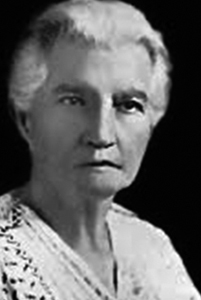
Dr. Josefa Emilia Toledo Murillo or Josefa Toledo de Aguerri (April 21, 1866 – April 27, 1962) was born in Juigalpa, Nicaugura. She became one of Nicaragua’s most consequential educators and feminist organizers. After earning a scholarship to the secular Colegio de Señoritas in Granada, she graduated with honors and, by her early twenties, was teaching and then directing girls’ schools in Granada and later Managua. She pressed for a modern curriculum, math, science, languages, arts, and helped bring kindergarten and early-childhood pedagogy into wider use at a time when few girls were prepared for advanced study.
Her schools doubled as cultural hubs. Toledo wrote short plays for student theater, hosted public readings, and turned campus events into community gatherings that placed girls’ education at the center of civic life. In 1924 she briefly served as Director General of Public Instruction, the first woman to hold the post, traveling to inspect rural schools and advocate for improvements.
She paired institution-building with concrete opportunities for working women. In 1919 she launched the Escuela Femenina de Prensa, a night school initially supported by regional newspapers that quickly enrolled hundreds of students and later received partial backing from the Ministry of Education. In the 1930s she helped create the Centro Femenino de Cultura Obrera to prepare women as skilled, civically engaged workers.
Publishing was another front. She founded Revista Femenina Ilustrada (1918–1920), widely regarded as Central America’s first magazine of its kind, and later Mujer Nicaragüense (1929–1930). Her organizing connected Nicaragua to broader feminist networks through the Liga Internacional de Mujeres Ibéricas e Hispanoamericanas and the Unión de Mujeres Americanas. In 1950 the Inter-American Commission of Women honored her as “Woman of the Americas.”
She was also a mentor who helped open academic doors for trailblazers like Elba Ochomogo, Nicaragua’s first woman with a university degree, and for Concepción Palacios, who, after studies in Mexico, became the country’s first female physician (and the first in Central America). Toledo also obtained her MD from the University of Mexico’s Medical School, but this distinction matters because Toledo is sometimes misidentified as the first woman doctor. Toledo’s actual vocation was education, and she used it to clear paths for others.
Beginning in 1937, she founded and directed the state Normal Central de Señoritas, and even after retiring from classroom work she remained active in feminist and cultural circles. She died in Managua on April 27, 1962. Today, she is remembered as a mother of public education in Nicaragua and an early standard-bearer of women’s rights.
REFERENCES:
- https://mujeresbacanas.com/josefa-toledo-1866-1962/
- https://www.redalyc.org/journal/869/86969306015/html/
- https://dialnet.unirioja.es/descarga/articulo/853058.pdf
- https://es.wikipedia.org/wiki/Josefa_Toledo_de_Aguerri
- https://en.wikipedia.org/wiki/Josefa_Toledo_de_Aguerri
- https://es.wikipedia.org/wiki/Concepci%C3%B3n_Palacios
IMAGE SOURCE:
- Photo of Josefa Toledo de Aguerri
- Fair Use
- Uploaded July 13, 2019
- Unknown publication
- https://maje.com.ni/entonces/987-quien-es-josefa-toledo-aguirre